Sign up and log in to WADeck
Go to app.wadeck.ai, create your account, and log in to your WADeck workspace.
Use WADeck to turn WhatsApp into an AI-powered assistant for automation. Scale conversations, improve response speed, and grow your business.
AI inside CRM
Use AI for reply drafting, translation, summaries, lead context, and follow-up reminders inside the customer workspace. Messages and CRM data are not used to train AI models.
HOW TO USE
Go to app.wadeck.ai, create your account, and log in to your WADeck workspace.
Add your WhatsApp account by connecting a cloud device in WADeck. Then invite teammates, assign roles, and set up collaboration in one shared workspace.
Configure Tools like Auto Reply, AI Translation, etc and start AI assistant to streamline your sales workflow.
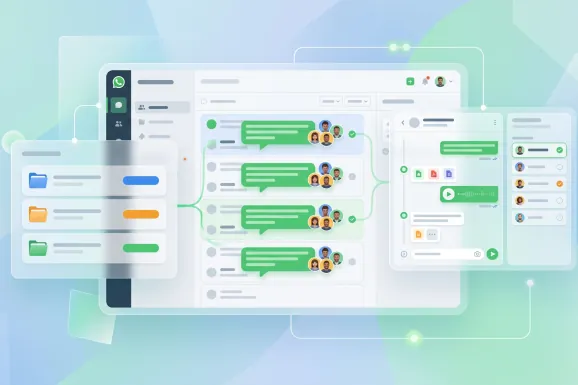
WADeck brings all your WhatsApp conversations into one unified inbox, creating the foundation of your WhatsApp AI agent. Instead of switching between devices or accounts, you can manage every interaction in a single workspace. This centralized view allows your AI-powered assistant to process conversations more efficiently, ensuring no message is missed and every customer receives timely attention.
Try for FreeWhatsApp AI agent is only effective when it understands context. WADeck automatically organizes conversations into contacts, companies, and pipelines, turning raw messages into structured data. This allows your automation workflows to operate with clarity—helping you track relationships, monitor deal stages, and move leads forward with less manual effort.
Try for Free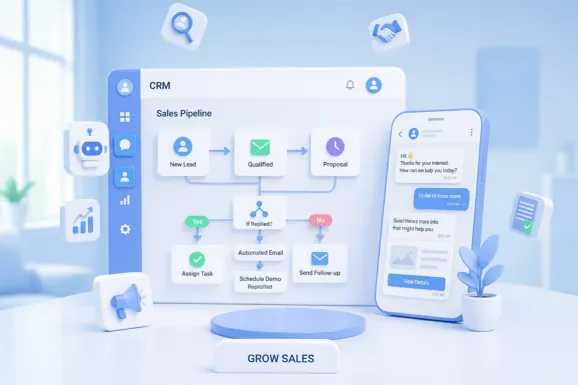
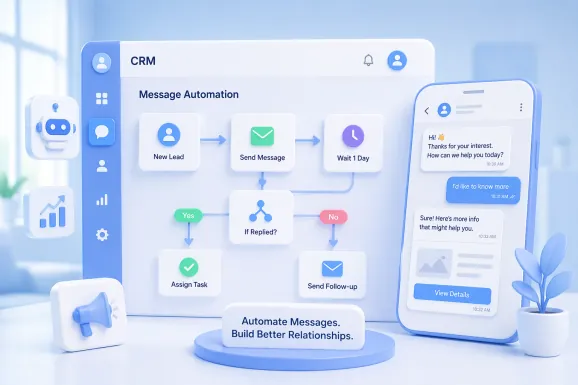
WhatsApp AI agent enables you to automate replies using predefined logic, templates, and triggers. This creates a WhatsApp AI assistant experience where messages are handled instantly and consistently. By reducing response time and maintaining communication flow, your business can stay active 24/7 without requiring constant manual input.
Try for FreeAutomation goes beyond instant replies. With our WhatsApp AI agent, you can schedule messages and trigger follow-ups based on timing or interaction stages. This ensures that conversations continue naturally, helping you maintain engagement, nurture leads, and improve conversion opportunities over time.
Try for Free
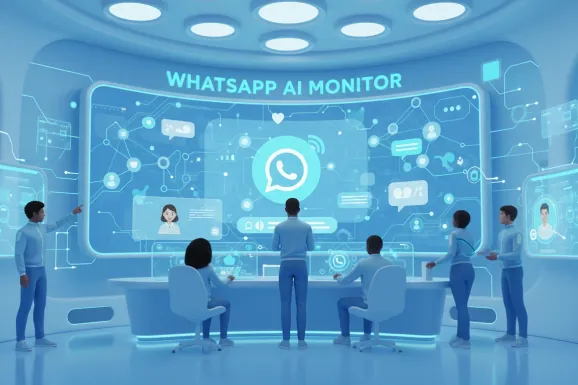
Visibility is critical for effective automation. Our WhatsApp AI assistant provides a centralized notification system that keeps you informed about conversations, updates, and workflow activity. Your WhatsApp AI agent works in the background while you stay in control, ensuring that important interactions are never overlooked.
Try for FreeWADeck transforms WhatsApp into a collaborative workspace powered by automation. With shared access, role management, and team coordination, your WhatsApp AI agent supports multiple users working together. This makes it easier to manage conversations at scale while maintaining consistency across your team.
Try for Free
See how WADeck differs from traditional WhatsApp automation tool in setup, automation, and usability.
| Feature / Capability | WADeck | Traditional WhatsApp Automation Tool |
|---|---|---|
| Setup Complexity | No code, no API required | Requires WhatsApp Business API or technical setup |
| AI Agent Experience | Workflow-based AI automation | Rule-based chatbots only |
| Conversation Management | Unified inbox for all chats | Fragmented or limited inbox systems |
| Lead Management | Built-in CRM (contacts, pipelines, companies) | Not included or requires integrations |
| Automation Level | Smart workflows across messaging, scheduling, and replies | Limited automation rules |
| Scalability | Designed for teams and growing businesses | Often limited to basic bot usage |
| Communication Style | Human-like, flexible interactions | Scripted chatbot responses |
| Integration | Direct WhatsApp integration | External API dependencies |
| Ease of Use | Simple, business-friendly interface | Technical learning required |
Use a WhatsApp AI agent for automation to qualify leads faster, keep pipelines moving, and follow up at the right time without manual busywork.

A WhatsApp AI agent is an AI-driven system that can understand intent, use conversation context, and take goal-oriented actions—like qualifying a lead, routing a request, or triggering a follow-up.
A regular WhatsApp chatbot is usually more rule-based, relying on fixed flows, buttons, or keyword triggers. In practice, a WhatsApp AI agent for automation is better for natural conversations and scalable operations, while a traditional chatbot is best for simple, predictable FAQs.
Try WADeck, you can launch a WhatsApp AI agent for workflow in minutes—no coding required.
Yes. Many teams choose a no-code route to launch a WhatsApp AI agent quickly without engineering work. With WADeck, you can set up automation workflows through a guided interface—so you can start building your WhatsApp AI assistant experience without writing code or managing API integrations.
WADeck's WhatsApp AI agent for automation can qualify leads by capturing key details from chats, organizing them into a structured pipeline, and triggering the next step—such as an instant reply, a scheduled follow-up, or a handoff to a sales rep. It helps keep qualification consistent across conversations, so high-intent leads get prioritized while routine questions are handled faster.
Yes. A WhatsApp AI assistant can support sales by responding faster, qualifying leads, and keeping follow-ups on track, while also helping support teams resolve common questions and route complex issues to the right person. The key is a shared workflow where automation accelerates the basics and humans step in for nuance—so both teams benefit without over-automating.